Zara Sullivan · 1 October 2026
Educators and Producers Collaborate on Environmental Curriculum Modules Tied to Regional Sustainability Goals
Schools across several regions have begun integrating curriculum modules developed through partnerships between educators and local producers, with these efforts directly supporting sustainability targets such as reduced water usage and improved soil health. The modules cover topics including resource conservation, biodiversity monitoring, and renewable energy applications, while drawing on real-world examples from nearby farms and manufacturing sites. Data from initial implementations indicate higher student engagement when lessons connect classroom concepts to measurable regional outcomes like lower emissions tracked by municipal reports.
Partnership Structures and Development Process
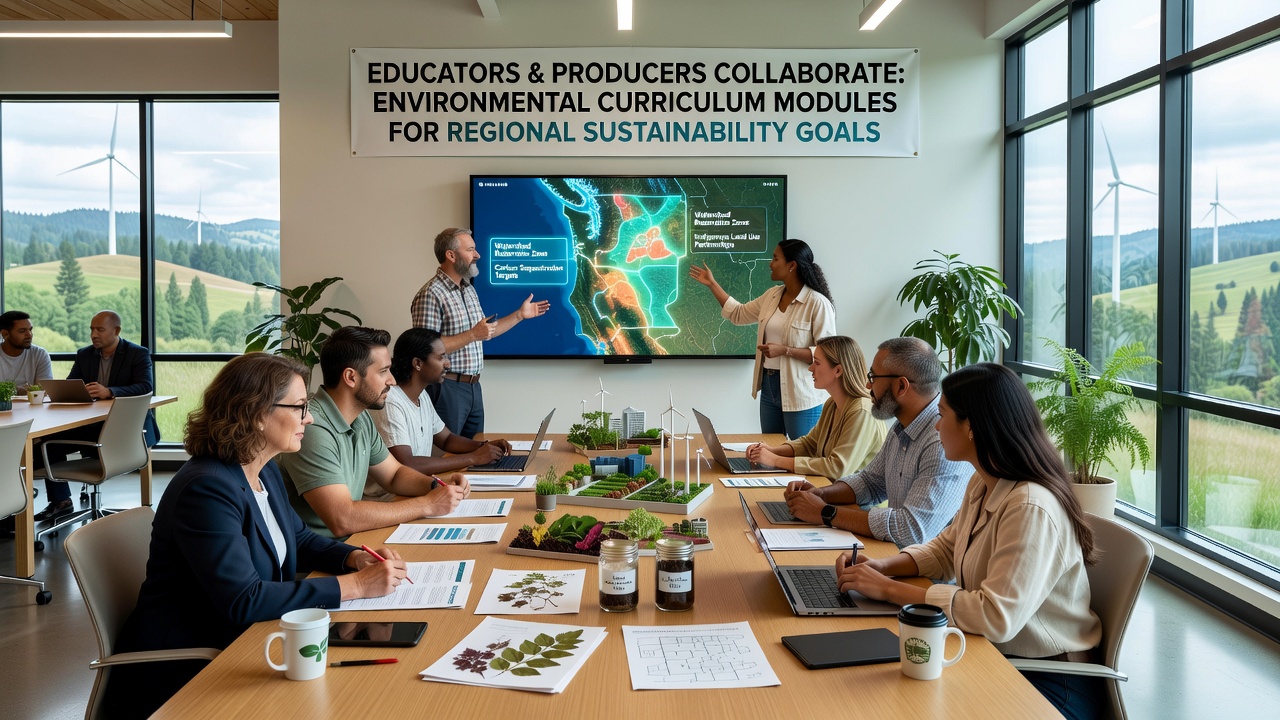
Teachers work alongside agricultural producers and small-scale manufacturers to design lesson plans that align with existing environmental benchmarks set by regional authorities, and these collaborations often start with joint workshops where participants identify shared priorities such as carbon footprint reduction and waste minimization. Curriculum teams then refine the content through multiple review cycles, incorporating feedback from both educational standards boards and industry representatives who provide case data on sustainable practices already in use. By October 2026 several districts plan to expand these modules into secondary school programs, building on pilot results that showed improved test scores in science and environmental studies.
Producers contribute practical insights such as irrigation techniques that conserve groundwater or supply chain adjustments that cut packaging waste, whereas educators ensure the material meets learning objectives and includes assessment tools. This exchange has led to modules featuring field visits, data analysis projects, and group simulations that mirror actual sustainability challenges faced by local operations. Research indicates these hands-on elements help students retain information longer compared with traditional lecture formats alone.
Content Focus and Regional Alignment
Each module ties specific learning outcomes to broader sustainability frameworks, including targets for renewable energy adoption and habitat restoration that appear in official planning documents. Students examine topics like nutrient cycling through soil samples collected from partner farms, then compare findings against benchmarks published by environmental agencies. One module series explores how producers track energy efficiency in processing facilities, giving learners access to anonymized datasets for analysis and reporting exercises.
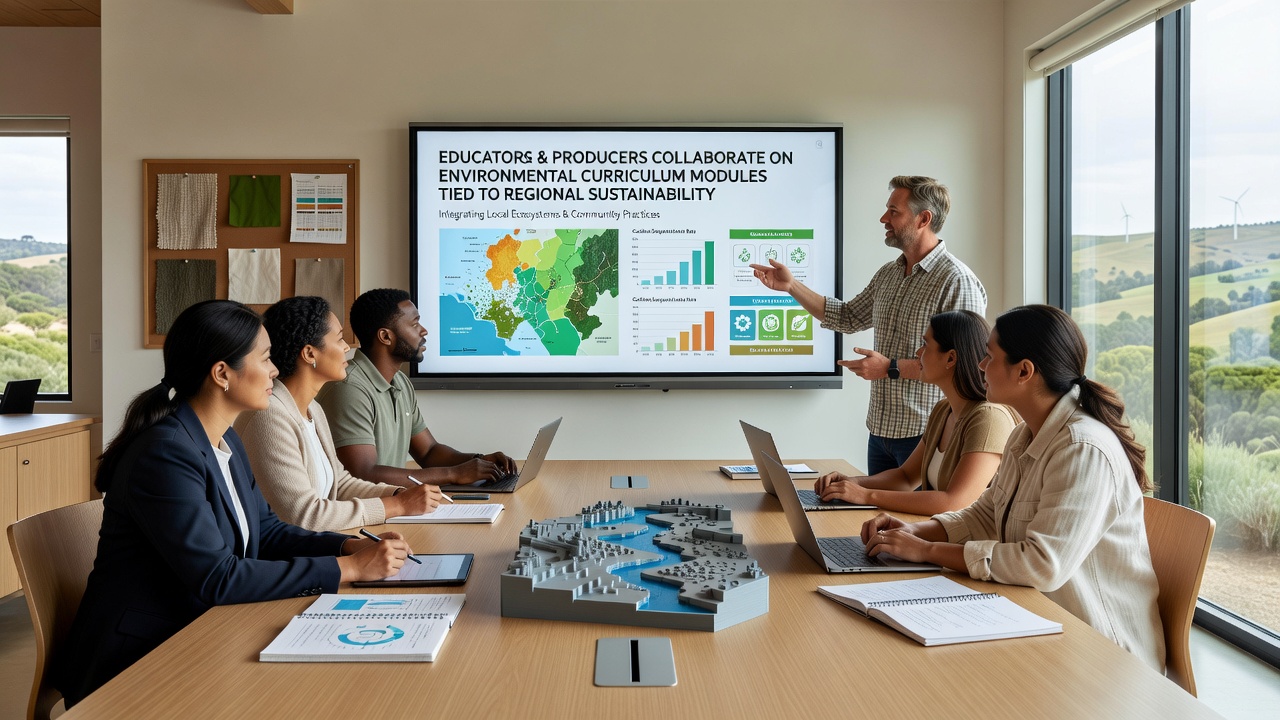
Regional goals often emphasize measurable progress in areas such as water quality improvement and biodiversity support, and the curriculum reflects these by requiring students to calculate potential impacts of different land management strategies. Producers supply updated information on seasonal variations and technological upgrades, which keeps the modules current without requiring frequent overhauls by school staff. According to the US Environmental Protection Agency reports on education partnerships, similar approaches have contributed to community-wide awareness campaigns that reinforce classroom lessons.
Implementation Examples and Measurable Outcomes
In one documented project a group of primary schools partnered with dairy producers to create units on methane capture systems, resulting in student-led audits of school cafeteria waste that informed local policy adjustments. Another collaboration with vegetable growers produced modules on cover cropping and erosion control, complete with mapping activities that use satellite imagery to track field changes over time. Figures from participating districts reveal increased enrollment in advanced environmental science electives following module introduction.
Assessment data collected through standardized rubrics show gains in both factual knowledge and problem-solving skills, while producer partners report greater visibility for their sustainability certifications among younger community members. Training sessions for instructors occur quarterly and feature guest presentations from technical experts who demonstrate tools such as soil sensors or solar monitoring apps. European Environment Agency publications highlight comparable initiatives that link school programs to farm networks as effective routes for scaling regional sustainability metrics.
Future Expansion and Resource Sharing
Plans call for digital repositories where updated modules and supporting datasets become available to additional districts, supported by grants that cover translation into multiple languages and adaptation for different climate zones. Observers note that ongoing producer involvement helps maintain relevance as new technologies emerge, such as precision agriculture software or closed-loop manufacturing processes. By late 2026 coordinators expect to release evaluation summaries that compare outcomes across urban and rural implementation sites.
Conclusion
These educator-producer partnerships continue to generate curriculum resources that connect academic standards with concrete sustainability achievements, and the approach relies on iterative input from both sides to stay aligned with evolving regional targets. Continued data collection through October 2026 and beyond will clarify long-term effects on student competencies and community practices.