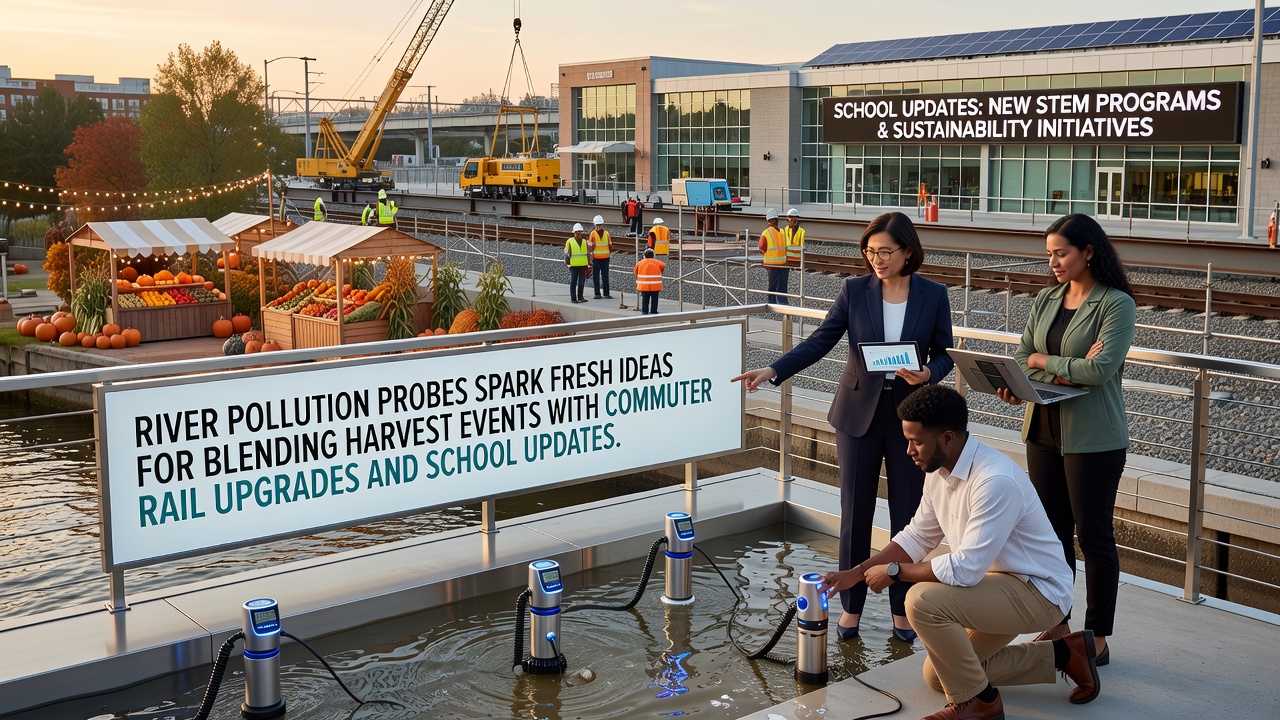
Jakob Braun · 15 October 2026
River pollution probes spark fresh ideas for blending harvest events with commuter rail upgrades and school updates
Investigations into river pollution in Ostfeld have prompted local authorities and stakeholders to explore integrated planning approaches that connect agricultural harvest events with improvements to commuter rail infrastructure and school facilities, and these efforts gained momentum through data collected during 2025 and into October 2026. Researchers from regional environmental agencies documented elevated levels of agricultural runoff and industrial residues along teh Ostfeld River, which flows through key farming zones and residential areas, while measurements indicated consistent exceedances of EU water quality thresholds in multiple sampling sites.
Authorities responded by initiating probe programs that combined water sampling with assessments of nearby transport corridors and community infrastructure, and this broader scope revealed opportunities for coordinated upgrades rather than isolated fixes. Data from the probes showed that pollution hotspots often aligned with rail crossings and school catchment zones, which created conditions for planners to consider joint solutions involving seasonal harvest gatherings, track modernizations, and building renovations.
Probe Findings and Initial Responses
Monitoring teams recorded nitrate concentrations reaching 45 milligrams per liter at several points downstream from farmland during peak growing seasons, and similar readings appeared near rail embankments where drainage systems required maintenance. These results aligned with reports from the European Environment Agency on comparable river systems across the continent, where integrated land-use strategies reduced contaminant loads by up to 30 percent in pilot regions. Local officials then convened working groups that included representatives from agriculture, transport, and education sectors to examine how harvest events could serve as testing grounds for new rail schedules and school access improvements.
October 2026 marked the release of an interim probe report that highlighted seasonal pollution spikes coinciding with harvest periods, and this timing encouraged proposals to link community festivals with rail trial runs and temporary school expansions. Planners noted that harvest events already drew large crowds to central fields adjacent to rail lines, which presented chances to test upgraded platforms and pedestrian links while simultaneously addressing school facility needs through shared funding mechanisms.
Connecting Harvest Events with Rail and School Projects
Harvest gatherings in Ostfeld typically occur in late September through mid-October, drawing participants for crop demonstrations, local produce markets, and educational workshops, while the new proposals suggest embedding commuter rail demonstrations directly into these events. Trial services would operate on upgraded tracks during festival hours, allowing attendees to experience reduced travel times from outlying districts to event sites, and data collected during these periods would inform permanent schedule adjustments. School updates enter the picture through plans to route some event programming through renovated school grounds, where temporary exhibits on water quality could occupy upgraded classrooms and outdoor spaces.
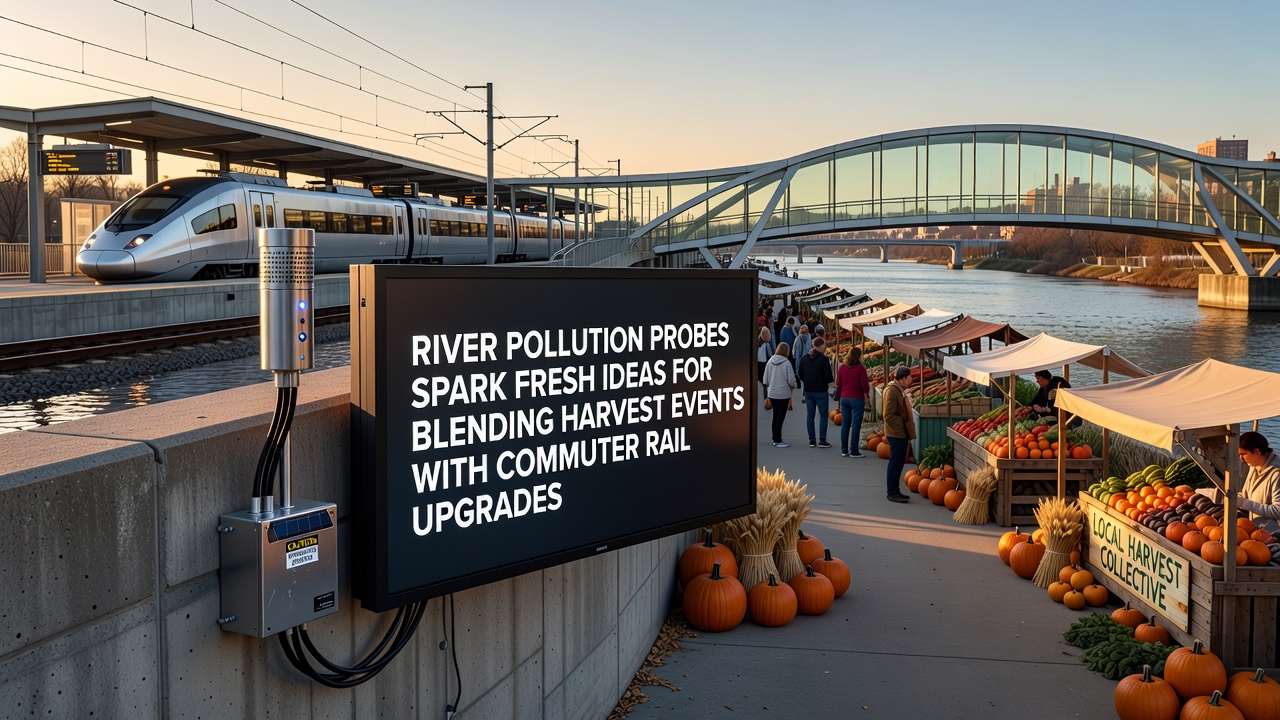
Engineers identified specific rail segments requiring electrification and signaling enhancements to handle increased festival traffic, and cost estimates placed these upgrades at approximately 12 million euros when bundled with school roof replacements and water filtration installations. A separate study from the U.S. Department of Transportation on multimodal corridor planning indicated that such bundling approaches often achieve 20 to 25 percent savings in administrative overhead compared with sequential projects. In Ostfeld the combined timeline targets completion of initial rail and school phases by spring 2027, with harvest events serving as public showcases for progress.
Implementation Pathways and Stakeholder Roles
Working groups established after the October 2026 report divided responsibilities across three main areas, and agricultural cooperatives agreed to host pollution monitoring stations at harvest sites while rail operators committed to pilot timetables during the same weekends. School districts contributed space for educational modules that explain probe results and future infrastructure benefits, creating a loop where event visitors learn about both environmental data and practical upgrades. Funding streams include regional development grants and contributions from transport authorities, which together cover monitoring equipment, track work, and classroom modernizations without requiring separate legislative cycles.
Technical teams began mapping drainage improvements that would reduce runoff into the river while supporting new rail embankments and school playground surfaces, and these maps incorporate real-time sensors linked to a central dashboard accessible to all participating organizations. Early modeling suggests the integrated approach could lower overall project durations by four to six months compared with standalone initiatives.
Conclusion
Continued monitoring through the remainder of 2026 will determine whether the blended strategies deliver measurable reductions in river pollutants alongside smoother commuter flows and enhanced school environments, and results from the harvest season trials will guide adjustments before wider rollout. The probe process itself has already established new data-sharing protocols among sectors that previously operated independently, which sets conditions for sustained coordination on future environmental and infrastructure challenges in the region.